
04 | 2026 Olli Laine, CEO & Co-founder
The partnership agreement for Kipinä Software was signed five years ago today. It is a fitting moment to pause and reflect on where it all began.
In April 2021, the two of us as co-founders sat down at a table and wrote down four core beliefs. They were not about technology, market share, or revenue targets. They were about people.
We believed that the strongest team ultimately prevails. That top talent gravitates toward places where they are respected. That clients value thriving, dedicated experts. And that purpose and life balance are not soft concepts, but the very core of business.
These beliefs gave birth to Kipinä Software. Now, five years later, we have 40 experienced specialists, highly satisfied clients (NPS 9.2), and B Corp certification. But the numbers are not what matters most. What matters most is how we got here — and why it is more relevant now than ever before.
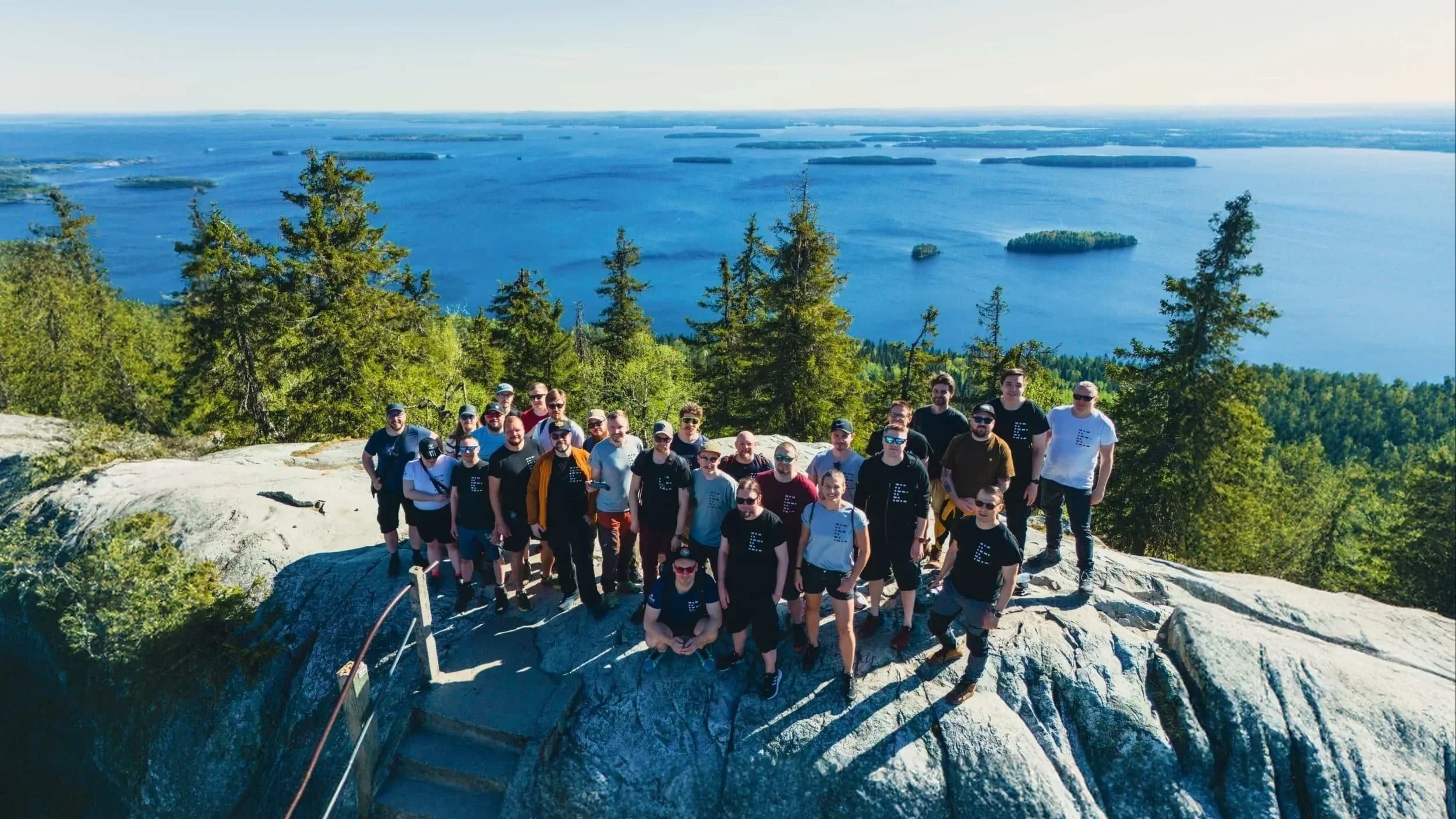
Community first, strategy second
During Kipinä's early years, we made a conscious choice that may still sound counterintuitive to many: we did not set numerical targets, establish OKRs, or draft a rigid strategy.
Instead, we focused on psychological safety, building our values, and nurturing the community. The first two years were dedicated to values and trust. In the third year, the focus shifted to competence development and collaborative decision-making. Only in the fourth year did we begin to discuss market shifts and how to respond to them. And only now, in our fifth year, are we engaging in strategic planning — defining how Kipinä prepares for an unknown future.
This might sound like a slow way to build a company. Yet looking at the results, it was the fastest way to build a sustainable foundation. Growing from two people to 40 experts was no accident. It happened because the community was built first.
Strategy without trust is merely paper. Trust without strategy forms a community capable of achieving almost anything.
Artificial intelligence does not make expert work easier
I talk a lot about AI — it is a daily reality at Kipinä. 100 percent of our projects leverage AI in some capacity. We have compiled best practices for agentic development, continuously train our team and clients, and develop software agentically. We have AI Lead Engineer roles and local LLM solutions that we advance along the client journey.
However, the more I work with artificial intelligence, the more convinced I become of one thing: AI does not make expert work easier. It makes it more demanding.
Consider for a moment how the value of an expert has traditionally been defined. An expert was the one who knew. The one who had experience, could answer questions, and mastered the information. Today, information and problem-solving capabilities are often accessible to everyone in seconds. Claude answers most questions faster and more comprehensively than any of us.
Moving forward, human value will essentially be determined by one thing: can I outperform mediocrity? Because mediocre work and thinking are already handled by agents better than us. That is a reality we cannot evade.
As experts and as a community, what will matter from now on is how we remain the best versions of ourselves while maintaining our well-being. If we do mediocre work while exhausted, our value becomes difficult to justify. Our sole mission is to excel — both as individuals and as a team. This calls for deep thinking, creativity, the courage to question, the ability to ask the right questions, interaction, and human judgment regarding what to believe in data and what to dismiss.
This is the paradox every organization is grappling with right now. And this is precisely where leadership comes into play.
The new mandate of leadership
In a hyper-variable world (perhaps a bit of buzzword jargon, but quite fitting right now), a leader's job is not to know everything. A leader's job is to create a space where people dare to experiment and say:
"I don't know, but let's figure it out together."
"That didn't work, but we learned from it."
"I need help."
This sounds simple. In practice, however, it demands more from a leader than traditional expert management ever did. It requires vulnerability — the ability to show that you do not have all the answers either. It requires relinquishing control and trusting that the community will carry the load. It requires the patience to give people room to grow, even when pressures push for speed.
At Kipinä, we do not measure leadership success by how efficient we are. We measure it by psychological safety, well-being, and whether people feel safe being their authentic selves.
And this is where team entrepreneurship is key. Here, everyone is a partner and a decision-maker. No hierarchical structures, no individual-centric compensation models. Leading this — ensuring the team can continuously be the best version of itself — is, in my view, the most crucial leadership task of the future. And I believe that team entrepreneurship makes this uniquely possible. When we commit and invest, we also share the rewards together. When people are genuinely owners, motivation to excel does not come from the outside, but from within.
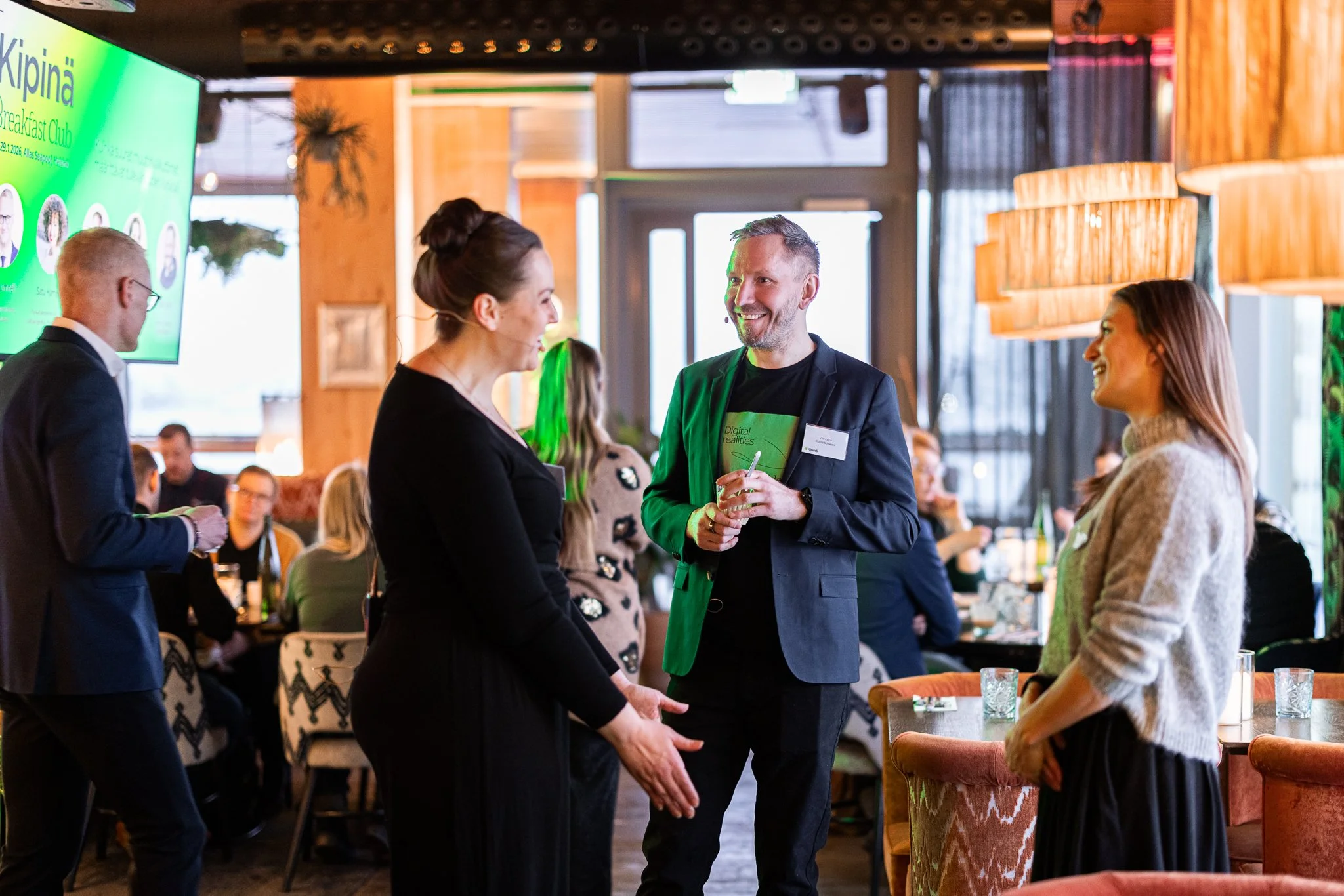
What learning truly requires
There is a lot of talk about "continuous learning" and "absorbing new information." Every organization talks about lifelong learning and reskilling. But we rarely talk about what learning actually requires.
It requires safety.
People do not learn in an environment where they fear failure. People do not try new things if a mistake means punishment or loss of face. People learn in an environment where failure is permitted — even welcomed — as a sign that someone tried something new.
At Kipinä, this is visible in practice. We have a jointly discussed and developed strategy, stemming from the belief that community and soft skills are at the core of our success. Furthermore, we share a code of conduct for collaboration that addresses not only technical processes, but also how we treat one another. Our competence development model balances technical skills with soft skills — because in the age of AI, soft skills are what separate a good team from an exceptional one. And we regularly measure both physical and mental well-being, because well-being is not a bonus, but a prerequisite.
The path of learning unfolds as follows: safety breeds curiosity. Curiosity breeds experimentation. Experimentation breeds learning. And learning breeds change. But everything starts with safety. Without it, nothing else works.
When heart and data meet
I share all of this because I believe it applies far beyond software companies. It applies to every organization that operates with and among people.
Artificial intelligence will not replace human connection. But it can free up time for what matters most: people. And for improving our day-to-day well-being.
Technology alone, however, is not enough. We need leadership built on trust. We need communities where it is safe to learn new things and admit what we do not yet understand. And we need the courage to acknowledge that none of us solves the challenges of the future alone.
The four beliefs upon which Kipinä was built are more relevant today than the day they were written. In five years, the world has changed faster than anyone could have predicted. Yet the fundamental principle remains unchanged: when we put people first, everything else follows.
An AI-capable community is not born from technology. It is born from trust, well-being, and the courage to be the best version of oneself — together.
Here is to successfully driving Kipinä through its next five-year terms!
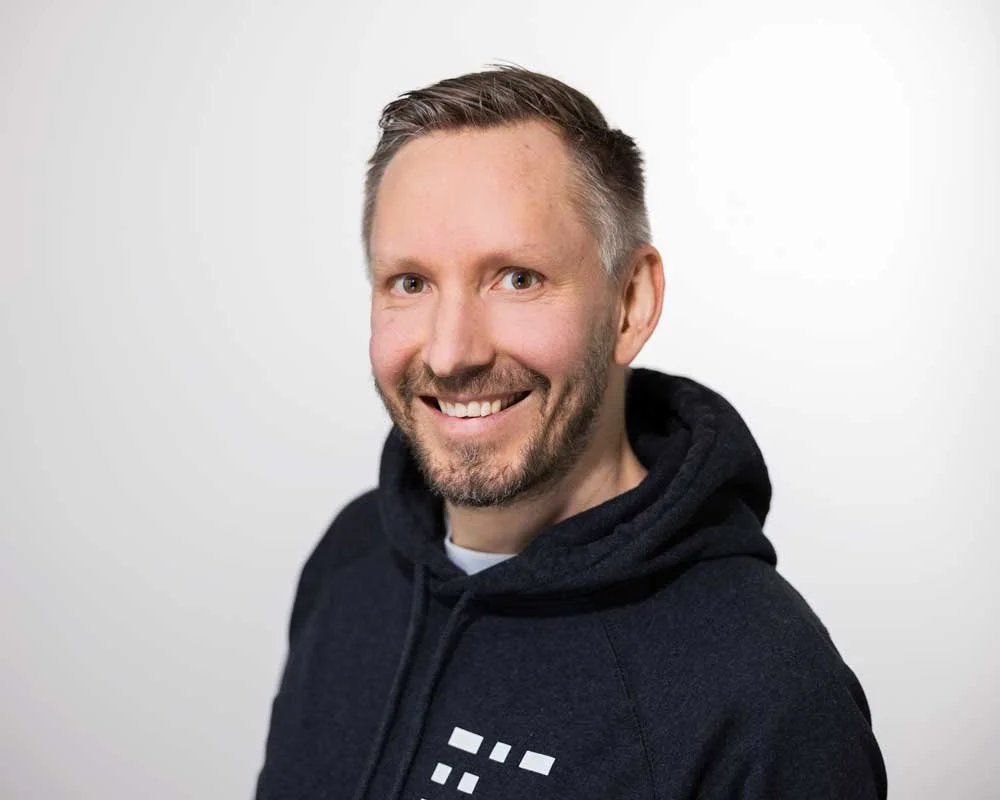
Olli Laine, CEO & Co-founder Kipinä
Olli Laine is a co-founder and CEO of Kipinä Software. He speaks enthusiastically about AI-capable communities and leadership.
