
06 | 2026 Jari Huilla, CTO & Partner, Kipinä
For about a year now, we have been organizing workshops and training sessions for our clients on artificial intelligence and agentic software development. These sessions have unlocked a wealth of insights that might otherwise go unnoticed in day-to-day agent work. Take away our best learnings on how to successfully integrate agentic development practices into your organization's operations.
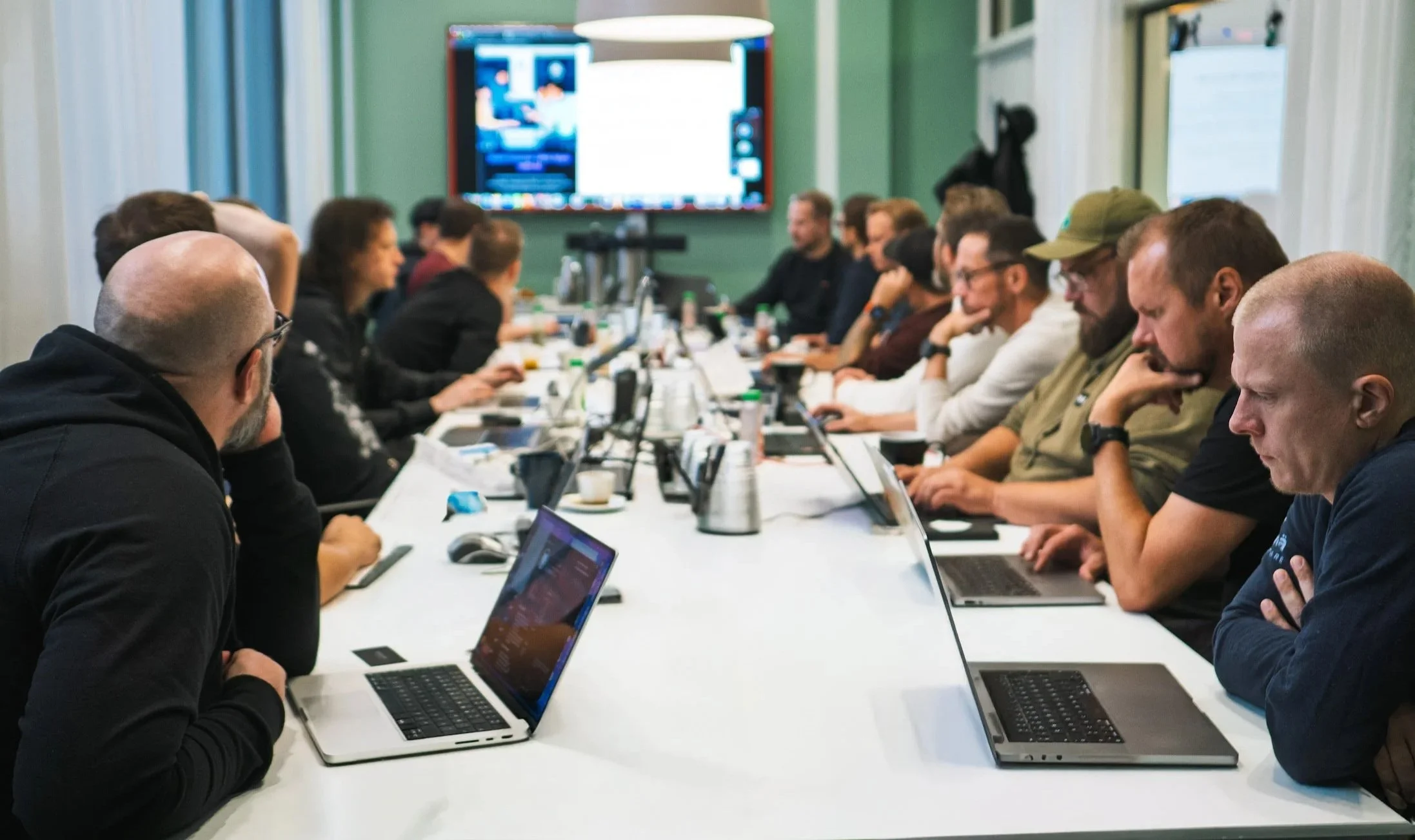
Which AI skills are most crucial to instill in organizations?
The two absolute core angles of agentic development that generate the most epiphany moments in organizations are:
💡 The ability to imagine the new: Modern tools are already so advanced that a developer's own imagination may be the biggest limiting factor. As with anything, imagination is best expanded by seeing someone more skilled demonstrate a practical example. However, imagination can also be hampered by fear if the core angle below is not mastered.
🔐 Information Security: When security issues related to agentic development are addressed clearly and without sugarcoating, the impact is often shocking. Did you know, for instance, that a carelessly used AI agent can operate with the same access rights as you across all web services where you are logged in via your browser? Or that when a coding agent executes a command-line script, it is vital to understand where that script is actually executed and what it might have access to?
How have our own perspectives evolved over the past year?
Just a year ago, in the spring of 2025, the core message regarding AI in software development could be bluntly summarized as:
"Wake-up call! Language models have evolved so much and so rapidly that you can genuinely code with them."
Who would have believed how much things could change in a year.
By the summer of 2026, a large proportion of software developers are already acutely aware of the technology's capabilities. The discussion has shifted toward how humans and AI agents work together, and how to resolve decision-making and teamwork bottlenecks in an environment where the speed of software development is no longer the primary limiting factor.
The leap has been massive. At the same time, we have had to continuously evolve the content and approach of our training programs to match a rapidly changing reality.
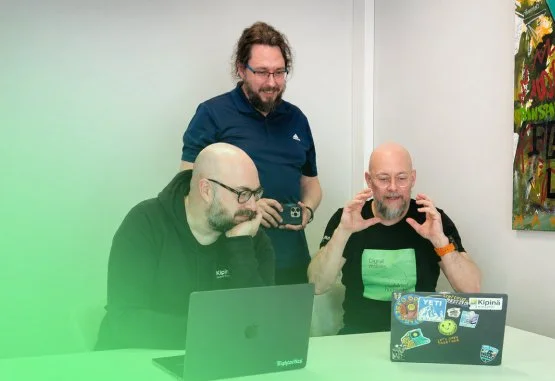
What are we giving special attention to now that we didn't even need to think about a year ago?
Just a year ago, most developers were actively "babysitting" their coding agents. The default assumption was that a human would approve at least tool calls and frequently file modifications as well.
Today, we pay much closer attention to the paradox that agents are capable of handling significantly broader scopes independently—for better or for worse.
If an agent is capable of working autonomously for hours, who actually wants to approve tool requests every now and then? And who genuinely has the energy to carefully evaluate every single request?
At the same time, agents are becoming increasingly adept at using tools, combining them, and occasionally circumventing the restrictions placed upon them. Consequently, the primary focus is no longer on continuous human oversight, but on building environments where access to critical resources such as API keys, secrets, and other sensitive assets is structurally restricted.
Nowadays, we recognize the limits of human oversight much better than we did a year ago.
Agentic development is, above all, a human transformation.
Over the past year, our biggest lesson has been that agentic development is not primarily a technological question.
The tools are already capable enough. True competitive advantage stems from how well an organization can envision new ways of operating, leverage agents as part of teamwork, and build secure operational models around them.
Simultaneously, the developer's role is evolving: instead of writing code, an increasingly large part of the work involves setting objectives, guiding agents, evaluating quality, and managing end-to-end scope.
If you want to understand what this shift means specifically for your organization, explore Kipinä's agentic development training programs. We train development teams to leverage agents safely, efficiently, and with control—ranging from initial AI assistants to multi-agent workflows and the creation of custom agentic development environments.

Jari Huilla, CTO & Partner, Kipinä
Jari Huilla is Kipinä's CTO, possessing an exceptionally long and diverse background in technology; his first role in the industry was at Nokia Research Center at the age of 15. Over the years, he has served as a developer, leader, and growth company builder. At Kipinä, Jari bridges deep technical expertise with business-driven thinking. He is particularly passionate about making AI solutions not only technically functional but genuinely purposeful—and ensuring their limitations are fully understood rather than simply bypassed.