
Nordic Business Forum 2025: 4 lessons for the future
09 | 2025 Olli Laine, Nora Lindahl, Jari Huilla

Last week, nearly 7 500 business representatives gathered in Helsinki for the Nordic Business Forum, with a common theme: Moving Forward. How do businesses cope with constant technological change and an unpredictable world and market? The sub-themes of foresight, growth and culture guided the presentations of top speakers from many perspectives.
Kipinä team was on the ground again this year, each gathering new ideas and insights to bring to cutting-edge software development. We picked three perspectives from NBF 2025 that offer new ideas for technology development from different directions.
The big wave of change is here
World-shaping forces such as the grand challenges of humanity, ageing populations, artificial intelligence, the polarisation of societies and the accelerating pace of change are permanently transforming the business environment every day. Often, these changes are gradual until they finally come to a head. Technology is making these changes faster and more intense.
Competitive advantage comes not just from reactivity, but from the ability to see ahead and build a culture where people grow with you. We need the courage to stop yesterday's work(yesterwork) and start looking to the future today. Innovation strategist Peter Hinssen pointed to the big wave of change, complemented by Risto Siilasmaa through mathematical models.
"If you're cleaning the shit of yesterday, you'll never focus on the day after tomorrow." - Peter Hinssen
Believe me, the environment will change faster tomorrow than today and we will enter more and more firmly into the never normal era . - Olli Laine, Kipinä CEO

Culture lives with the meaning of the purpose, the company
Leadership was strongly present in almost all the presentations, and the emphasis on human leadership in Kipinä's values resonated with the programme. From a cultural perspective, the most compelling content was provided by Sukhinder Singh Cassidy, CEO of Xero.
Cassidy highlighted how it is often mistakenly thought that culture, values and purpose are one and the same thing. However, this is not the case, it is purpose that is permanent and the culture around it must change to support the core purpose of the company. As celebrated as a 'strong culture' is in many companies, it can also cast a shadow over change if it prevents movement towards the big picture. Cassidy therefore urges us to seek out where the action is, and to value different people - especially those who dare to challenge and shake up the culture.
Catalysts just like the Senior Tech Leadership approach at Kipinä. To create movement and newness, by questioning the current culture and stagnant ways of doing things.
- Nora Lindahl, Kipinä Head of Operations
Uncertainty is permanent - and an opportunity for courage
The NBF discussions strongly emphasised the idea that uncertainty is not a transient condition but a permanent part of business. Fighting it is futile - instead, it requires courage, empathy and the ability to see uncertainty as an opportunity.
The critical issue in management is how to treat people and in the big picture how to get people to pull together. When trust is broken because of haste, austerity or going against values, the result is a long downward spiral. A strong backbone only comes from people feeling heard and treated fairly. That backbone is a necessary basis for cooperation and therefore for success. Too often, companies lack a clearly differentiated vision and strategy, or an understanding of the importance of collaboration in an increasingly competitive environment, because they are difficult or hard to build. However, it is precisely in the face of uncertainty that such a direction is vital and requires courage. We need actions and examples, not just words.
At the NBF, innovation strategist Peter Hinssen echoed Voltaire's idea: "Uncertainty is unpleasant. Certainty is absurd." When you accept uncertainty, you can embrace it with curiosity - and then courage, renewal and opportunity begin to grow.
- Kari Kellokoski, Kipinä COO (edited)

Freedom and a sense of belonging at the heart of development
Developing skills at Kipinä is important to deliver on our customer promise of senior-level experts who act as both team coaches and top players. So it was great to see how many of this year's speakers had picked up on the theme of learning. The common thread that I identified in almost all the speeches was the idea that learning and growing together is at the heart of humanity. Gianpiero Petriglieri therefore encouraged us to build learning cultures at home, combining above all freedom and a sense of belonging.
The question is not always "How do I make it better" but above all "How do I make it matter".
At the same time, we must remember that we do not learn alone. As Diana Kander said, "Never goal alone." We need each other - new perspectives, challengers and partners. Skills development is not just an individual project, it is a cultural process that constantly requires new people, new ideas and the courage to ask different questions.
- Jari Huilla, Kipinä CTO
Moving forward - together towards tomorrow's solutions, not yesterday's problems
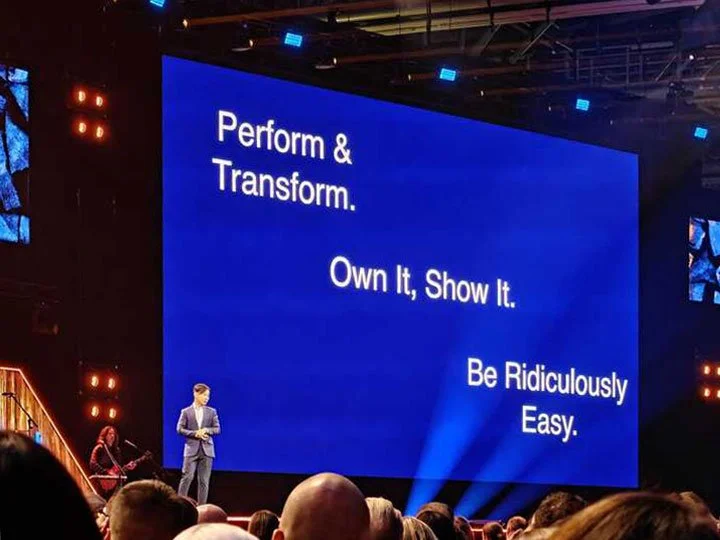
Moving Forward 2025 as the theme of the year was apt for us in Kipling. Deep meaning, values and learning together have been part of the bedrock from which Kipinä was born. We have always believed in openness and the need to be able to discuss difficult issues in a frank and constructive manner. We are proud to take on the role of 'catalyst', the bold challenger that Diana Kander also spoke of, to bring tomorrow's solutions to software development - not just focusing on yesterday's problems.
The most important thing is that we move towards the great wave of change together; by fostering openness, courage and the common good. Our culture, both internally and among all actors, is never a permanent construct, but a living, breathing and ever-changing one, key as we are.
If you are interested in future solutions and AI in technology development, check out the other Insights articles, for example: